📛️
Λατῖνα ὀνόματα
Roman names
🌗️
Λευκὸν χρῶμα
Light theme
Ἡρακλέους
Θυμίαμα λίβανον
Ἥρακλες ὀβριμόθυμε, μεγασθενές, ἄλκιμε Τιτάν,
Hḗracles obrimóthyme, megasthenés, álcime Titán, καρτερόχειρ, ἀδάμαστε, βρύων ἄθλοισι κραταιοῖς,
carterócheir, adámaste, brýōn áthlœsi cratæœ̂s, αἰολόμορφε, χρόνου πάτερ, ἀίδιός τε εὔφρον,
æolómorphe, chrónou páter, aídiós te eúphron, ἄρρητ’, ἀγριόθυμε, πολύλλιτε, παντοδυνάστα,
árrhēt’, agrióthyme, polýllite, pantodynásta, παγκρατὲς ἦτορ ἔχων, κάρτος μέγα, τοξότα, μάντι,
pancratès êtor échōn, cártos méga, toxóta, mánti, παμφάγε, παγγενέτωρ, πανυπέρτατε, πᾶσιν ἀρωγέ,
pampháge, pangenétōr, panypértate, pâsin arōgé, ὃς θνητοῖς κατέπαυσας ἀνήμερα φῦλα διώξας,
hòs thnētœ̂s catépausas anḗmera phŷla diṓxas, εἰρήνην ποθέων κουροτρόφον, ἀγλαότιμον,
eirḗnēn pothéōn courotróphon, aglaótimon, αὐτοφυής, ἀκάμας, γαίης βλάστημα φέριστον,
autophyḗs, acámas, gǽēs blástēma phériston, πρωτογόνοις στράψας βολίσιν, μεγαλώνυμε Δαῖμον,
prōtogónœs strápsas bolísin, megalṓnyme Dæ̂mon, ὃς περὶ κρατὶ φορεῖς ἠῶ καὶ νύκτα μέλαιναν,
hòs perì cratì phoreîs ēô cæ̀ nýcta mélænan, δώδεκ’ ἀπ’ ἀντολιῶν ἄχρι δυσμῶν ἆθλα διέρπων,
dṓdec’ ap’ antoliôn áchri dysmôn âthla diérpōn, ἀθάνατος, πολύπειρος, ἀπείριτος, ἀστυφέλικτος·
athánatos, polýpeiros, apeíritos, astyphélictos; ἐλθέ, μάκαρ, νούσων θελκτήρια πάντα κομίζων,
elthé, mácar, noúsōn thelctḗria pánta comízōn, ἐξέλασον δὲ κακὰς ἄτας κλάδον ἐν χερὶ πάλλων,
exélason dè cacàs átas cládon en cherì pállōn, πτηνοῖς τ’ ἰοβόλοις κῆρας χαλεπὰς ἀπόπεμπε.
ptēnœ̂s t’ iobólœs cêras chalepàs apópempe.
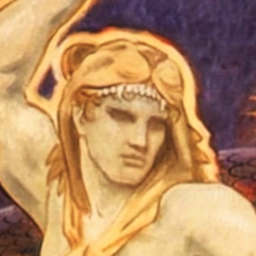
To Heracles
The fumigation from frankincense
Hear, pow’rful, Hercules untam’d and strong,1 2
1
Since, according to the Orphic theology, there are two worlds, the intelligible and the sensible,
the former of which is the source of the latter; so, according to the same theology, the first
contains in a primary, causal, and intellectual manner, what the second comprehends secondarily and
sensibly. Hence it contains an intellectual heaven and earth, not like the material, existing in
place, and affected with the circulations of Time; but subsisting immaterially in the stable essence
of eternity.
In this divine world, another sun, and moon, and stars shine with intellectual light; for every
thing there is perfectly lucid, light continually mingling with light. There, as Plotinus divinely
observes, every star is a sun: and though all things are beheld in every thing, yet some things are
more excellent than others. Now from this intellectual heaven and earth, resident in Phanes, the
king and father of the universe, Orpheus, according to Proclus, derives the orders of the Gods,
subordinate to this sensible heaven and earth: and among these he relates the following progeny of
the intellectual earth, as preserved by Proclus in his excellent
Commentary on the Timæus, p. 295 , and by Athenagoras in
Apol.
“She produced seven beautiful pure virgins with voluble eyes, and seven sons, all of them kings,
and covered with downy hair; the daughters are Themis and prudent Tethys, and fair-haired
Mnemosyne, and blessed Thea ; together with Dione,
having an illustrious form, and Phœbe and Rhea the mother of king
Zeus . But this illustrious earth generated
celestial sons, which are also sirnamed Titans, because they took revenge on the great starry
heaven; and these are Cœus and great
Cræus , and robust Phorcys, and
Saturn , and
Ocean , and Hyperion, and Iapetus.”
Now Hercules is celebrated in this Hymn as the Sun, as the nineteenth and twentieth lines
particularly evince; and the Sun is the same with Hyperion; hence the reason is obvious why Hercules
is called “earth's best blossom”. And we shall find that
Saturn in
the following hymn is called “blossom of the earth”; and Themis, in
Hymn LXXIX , “young blossom of the earth”; and the Titans, in
Hymn XXXVII , “the illustrious progeny of heaven and earth.”
2
Since the intelligible world, which, as we have already observed, was produced from Æther and Chaos,
is nothing else than the comprehension of all the demiurgic ideas in the divine mind, which is,
according to Orpheus, the God Phanes; it remains that the sensible world, which is but the image
τοῦ γνωστοῦ παραδείγματος of an intelligible paradigm, should be produced
according to its similitude, and filled with its proper divinities. Now Phanes, the author of the
sensible world, is represented by Orpheus (for the purpose of symbolically representing the causal
production of the universe) as adorned with the heads of various animals. According to Athenagoras,
with the head of a dragon, of a lion, and the countenance of the God himself; but according to
Proclus and others, in the words of Orpheus, with the countenance of a ram, a bull, a serpent and a
lion. And this Phanes Athenagoras informs us is denominated by Orpheus,
Hercules , and Time. Hence we see the reason why
Hercules is said to shine with primogenial fires;
since he is no other than Protogonos in the intelligible, and
the Sun in the sensible world. Hence too the reason is
apparent why Saturn who is the same with Time, is called
in the following Hymn , Τιτὰν i.e. Titan, or
the Sun .
 Οἱ Διαδικτυακοὶ Ὀρφικοὶ Ὕμνοι The Orphic Hymns Online